
University of Szeged
Albert Szent-Györgyi Medical School
Foreign Students' Secretariat
Your Education. Our Mission.


Advancing Biomedical Science: Host–Pathogen Interaction Center Inaugurated at the University of Szeged with Support from Alumna and Nobel Laureate Katalin Karikó
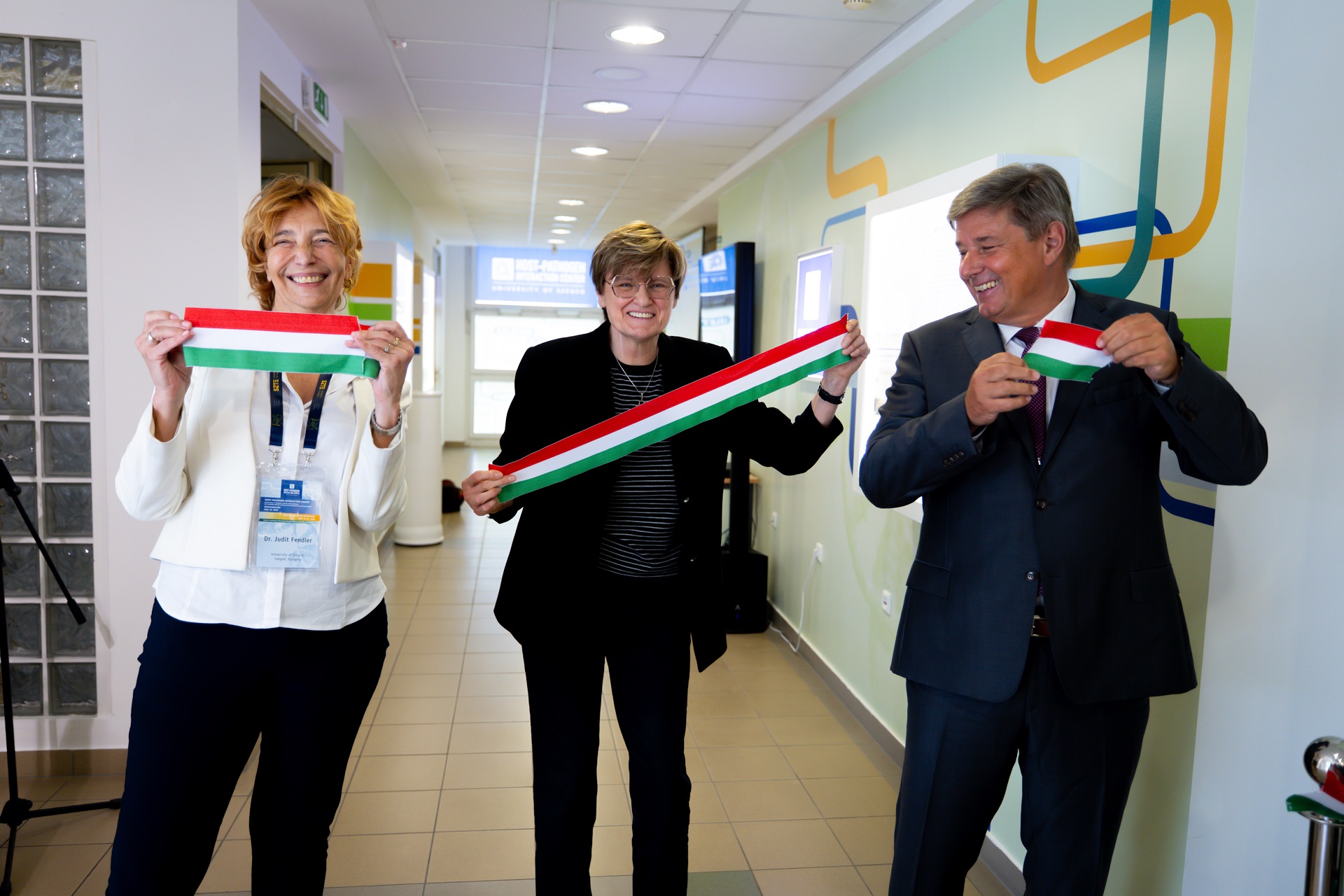
On May 12, the University of Szeged held an official ceremony to inaugurate its new research unit: the Host–Pathogen Interaction Center. Located within the Institute of Biology, the Center features Hungary’s only in vivo experimental station of its kind, alongside five newly renovated laboratories. This state-of-the-art facility is designed to support the development of antimicrobial therapies, with a particular focus on antifungal treatments – addressing a pressing yet often overlooked public health concern. The project was made possible through both professional and financial support from Katalin Karikó, an SZTE alumna and recipient of the 2023 Nobel Prize in Physiology or Medicine.
According to current estimates, more than one billion people around the world are affected by fungal infections, which claim over 1.5 million lives each year. One of the main reasons for this alarming impact lies in the vast diversity and evolutionary distance among fungal pathogens, which present a major challenge to effective treatment and make the development of broad-spectrum therapies particularly difficult.
Operating within the University of Szeged’s Center of Excellence for Interdisciplinary Research, Development and Innovation (IKIKK), the newly established Host–Pathogen Interaction Center enables comprehensive, coordinated research into fungal infections – with particular emphasis on species that pose a direct threat to human health. Researchers at the facility will primarily focus on developing mRNA-based vaccines and therapeutic strategies for use in clinical care. These innovations are intended to protect patients in intensive care units from life-threatening fungal infections and to provide effective treatment for tens of thousands of women affected by gynecological conditions caused by Candida fungi.
The new facility, made possible by an investment of nearly 200 million forints, was inaugurated in the presence of the leadership and staff of the University of Szeged and the new center, as well as Katalin Karikó and several internationally renowned experts in the field. Among the distinguished guests were Mihai Netea, recently awarded the title of honorary doctor by the University of Szeged and professor at Radboud University in the Netherlands; Norbert Pardi, researcher at the University of Pennsylvania; Maria de Lourdes Oliveira, representing the Fiocruz Foundation; and Philippe Bastin from the Pasteur Institute.
The research infrastructure of the Host–Pathogen Interaction Center is well suited for the comprehensive preclinical testing of promising antimicrobial agents. It also acts as a catalyst for collaboration – both within the university and with external partners – particularly when high-quality in vivo studies are required before launching clinical trials. This makes it possible to carry out full preclinical assessment of compounds, up to the point at which Phase I clinical trials involving healthy human volunteers may be initiated.
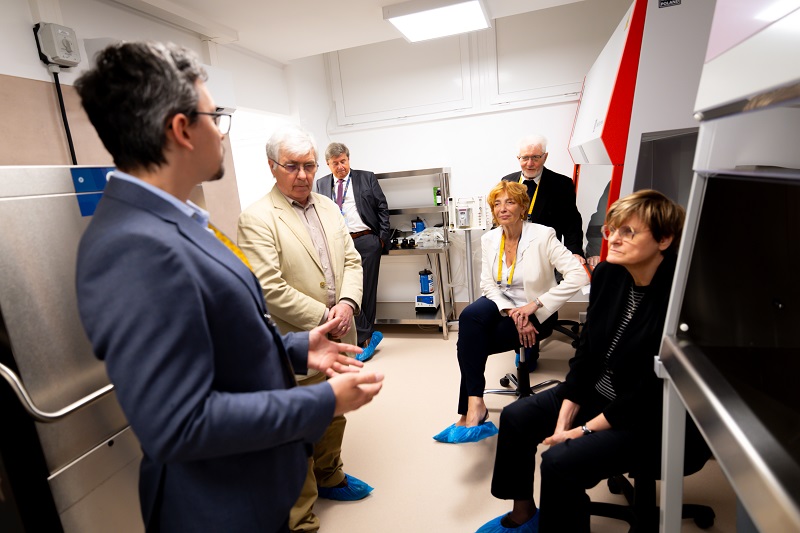
The Host–Pathogen Interaction Center has opened within the Institute of Biology at the University of Szeged.
Photo: István Sahin-Tóth
“I’m delighted to inaugurate this remarkable center in the company of my former professors and fellow students. I had a chance to look around – it’s truly impressive, and I hope it will contribute to science through countless valuable experiences, insights, and discoveries,” said Katalin Karikó, who personally welcomed the center’s staff at the opening event. In addition to her presence at the ceremony, the University of Szeged’s Nobel Prize-winning professor played a key role in making the center a reality: she donated the cash prizes from three major awards she had previously received to support the establishment of the laboratories.
“With the establishment of the Host–Pathogen Interaction Center at the University of Szeged, we have created an integrated research unit that covers the full spectrum of experimental systems, including in vitro, ex vivo, and in vivo approaches. This enables the complete execution of preclinical research, right up to the preparatory phase for Phase I clinical trials,” emphasized Professor Attila Gácser, head of the Institute of Biology at the University of Szeged and director of the Host–Pathogen Interaction Center. “While the center’s primary research focus is on fungal infections, our aim is to provide an open platform for research collaborations both within and beyond the university, particularly for projects requiring advanced in vivo experimental infrastructure. We are especially pleased that, in addition to opening the center, we have signed cooperation agreements with the Brazilian Fiocruz research network and the Pasteur Institute in Montevideo – further strengthening our international partnerships in infectious disease research,” the director added.
The establishment of the Host–Pathogen Interaction Center marks a significant milestone in the research and innovation ecosystem of both the University of Szeged and the broader region. In the long term, the facility has the potential to position Szeged and the university as key contributors to global research and development efforts in antifungal and antimicrobial therapies.
Source: SZTEinfo
Photos: István Sahin-Tóth
Latest news

It is with shock and sincere sorrow that we bid farewell to Professor Emeritus József Molnár, who passed away quietly at the age of 89.
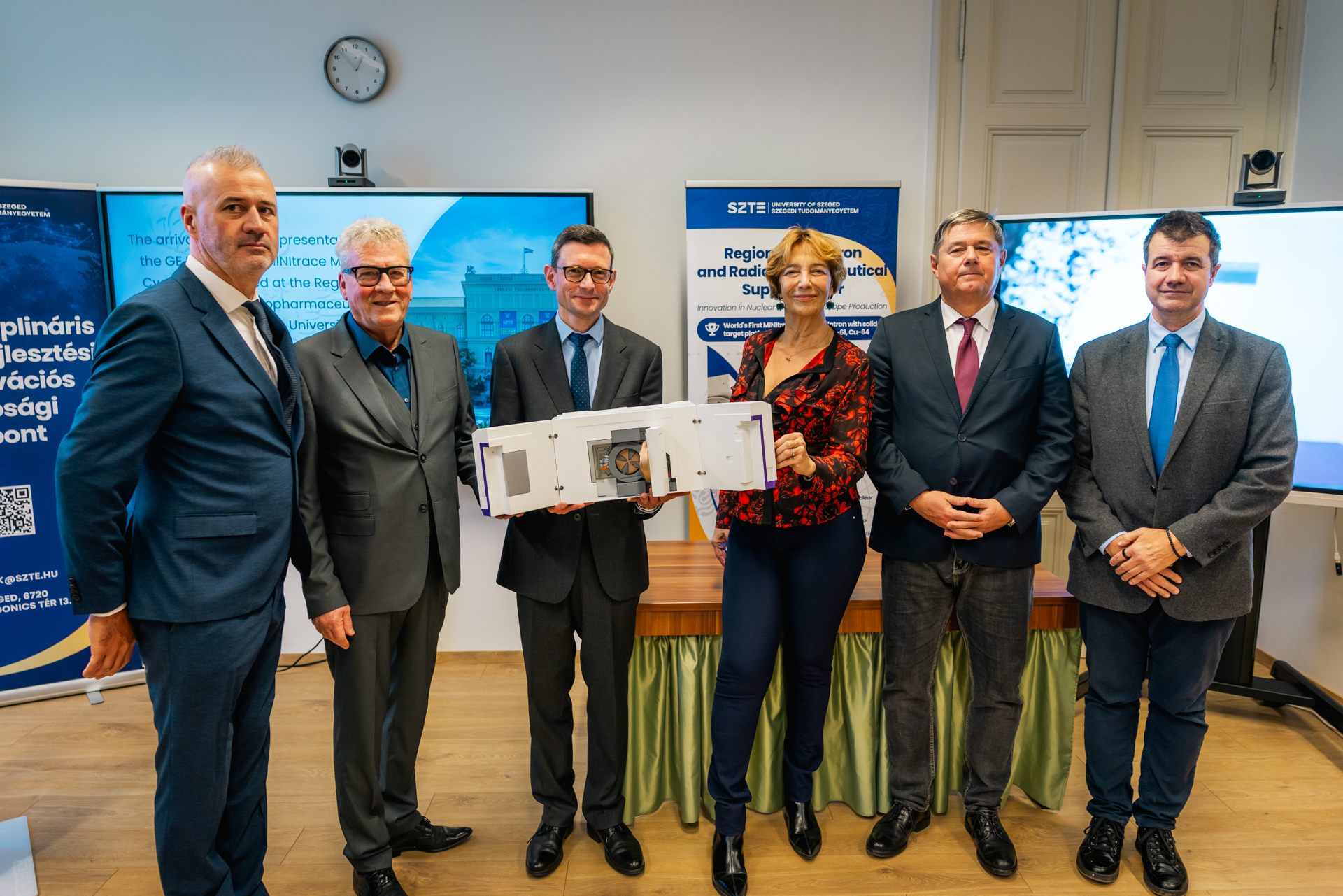
Following a cornerstone-laying ceremony for SZTE’S Regional Cyclotron and Radiopharmaceutical Supply Center in April, another major milestone has been reached in one of the University of Szeged’s flagship strategic investments. On December 9, GE HealthCare announced that – for the first time worldwide – the MINItrace Magni cyclotron will be installed at the University of Szeged, marking a major advance for nuclear medicine and theranostic treatment in Hungary. At a special event held at the University’s main building, the significance and future impact of the pioneering device were outlined by Prof. Dr. László Rovó, Rector of the University of Szeged; Dr. Judit Fendler, Chancellor; Prof. Dr. László Pávics, Professor at the Institute of Nuclear Medicine and project leader; Dr. György Erőss, Regional Customer Relations Manager for Central and Eastern Europe at GE HealthCare Hungary Kft.; and Jan Wolber, Global Product Leader for GE HealthCare Digital.
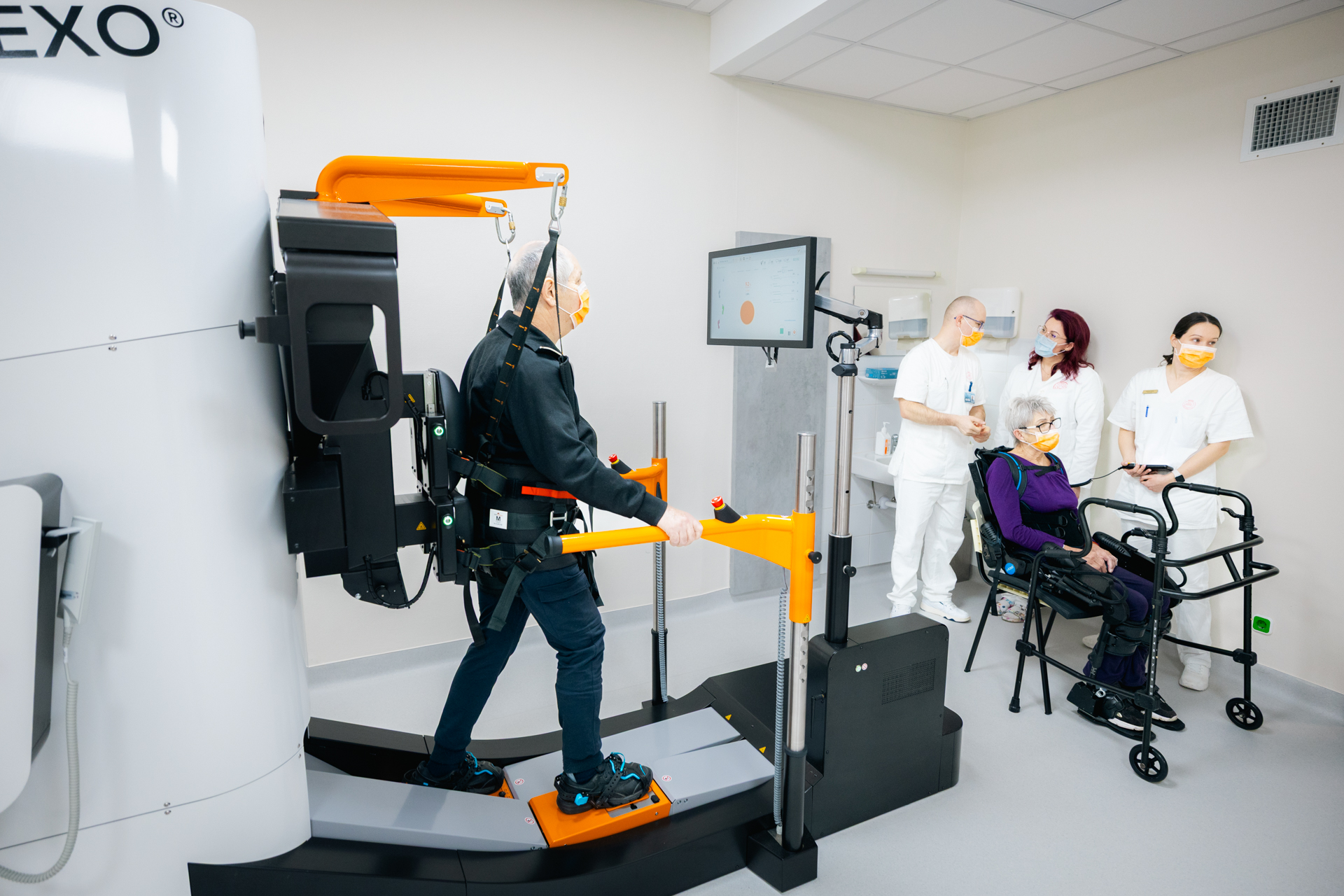
The University of Szeged has inaugurated its Human Kinesiology Laboratory, where cutting-edge robotic technologies are being deployed to enhance the effectiveness of rehabilitation therapies and actively support patients throughout their recovery process.
Useful links
Faculty of MedicineFaculty of Dentistry
Faculty of Pharmacy
Faculty of Health Sciences and Social Studies
International Student Union of Szeged
SUMAA
University Library
Ministry of Foreign Affairs
Office of Immigration and Nationality
College International
International Mobility Centre (ERASMUS)


