
University of Szeged
Albert Szent-Györgyi Medical School
Foreign Students' Secretariat
Your Education. Our Mission.


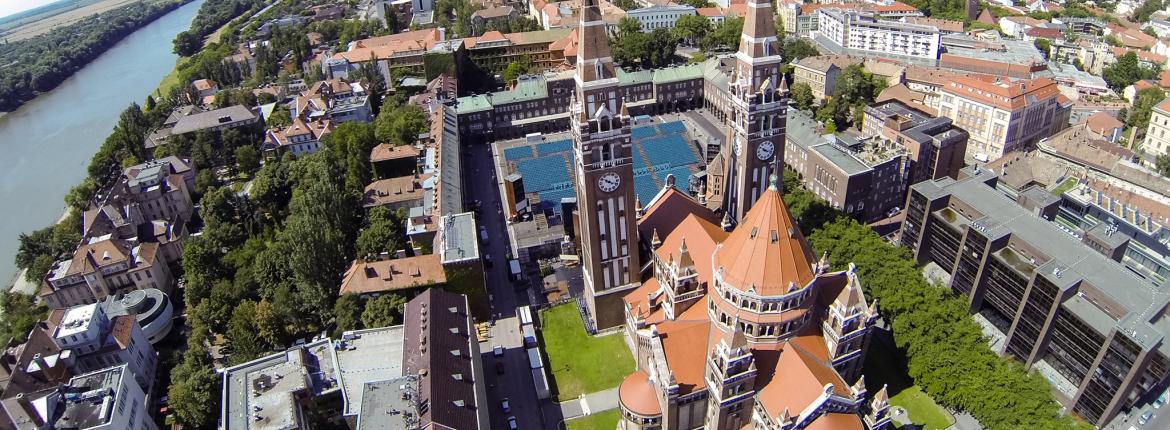
Szeged: Yesterday and Today
Situated on the banks of River Tisza, Szeged is a city with deep historical and cultural roots. Even before the establishment of the Hungarian Kingdom in 1001 AD, Szeged was already an important center of trade, and by the year 1246 it was granted town status by King Béla IV. Even though economic and cultural development was nearly brought to a standstill by the Turkish occupation between 1526 and 1686, the city continued to grow and prosper until regaining its special royal rights in 1719.
In the 19th century, the development of the city rapidly accelerated, Szeged played a prominent part in the War of Independence (1848-49), as it was the site of the famous recruiting speech by Lajos Kossuth, and was also the last seat of the Parliament of the Revolutionary Government in 1849.
Most of the city was destroyed in 1879 when the River Tisza overflowed its banks and inundated the surrounding areas. The city was devastated, however, with the financial support and aid of a number of foreign countries, the entire city was reconstructed. Thus, its present layout of wide streets, incorporating a network of three rings with avenues crossing them, gives the city its fairly modern and organized appearance. For many centuries Szeged has been a center of trade and education. Since World War II, and especially since the 1960's, many new high-rises have been built, providing up-to-date standard of housing. Food processing is Szeged's leading industry. The "szalámi" and "paprika" business has brought fame and credit to the city.
Szeged, with a population of 170,000, is often named the "City of Sunshine." It is situated on the southern edge of the Great Hungarian Plains. It is well-known for its hot, sunny summers with temperatures ranging between 25-35°C, while the winters are usually mild with an occasional cold spell. There are several large parks and a famous botany garden.
Szeged is characterized by the excellence of its cultural institutions. The city has a museum of history, art galleries, movie theaters, dancing clubs, discos, a recently remodeled theater where outstanding performances are presented. The Szeged Opera and Ballet Company and its Symphony Orchestra provide a full season of productions. During the summer, wonderful open-air music and dance festivals are held in front of the Votive Church and attract visitors throughout Europe.
The city provides a full-season cultural program, the "Collegium Artium," which is a wide-ranging series of lectures on various topics of art, literature and music.
Fine restaurants are scattered all over the city including various national cuisines, e.g. Greek, Chinese, Italian and Arabic.
Although the population of Szeged is mostly Catholic, there are many other congregations having beautiful churches (e.g. Greek and Serb-Orthodox, Protestant-Presbyterian and a Synagogue).
Sports clubs are available for recreations and students are especially encouraged to join the sports clubs and cultural associations of the University.
Szeged is on highway E-75, which begins in Ostende (Belgium) and continues to Istanbul (Turkey) via Budapest and Szeged. The nearest airport is in Budapest from where Szeged can easily be reached by Inter-City train in 2 hours.
A rent-a-car system also operates throughout Hungary. Public transportation in the form of streetcars, trolleybuses and buses operates on a regular schedule.
Latest news
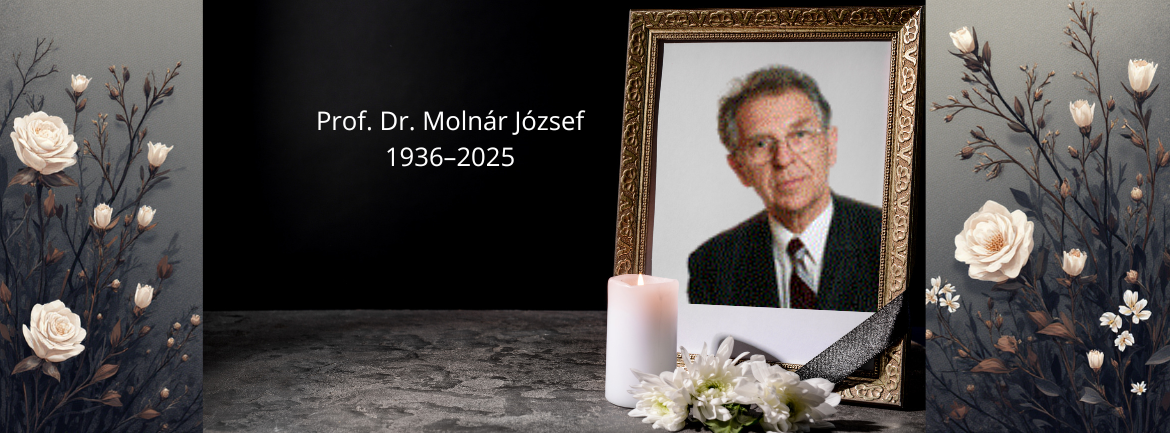
It is with shock and sincere sorrow that we bid farewell to Professor Emeritus József Molnár, who passed away quietly at the age of 89.
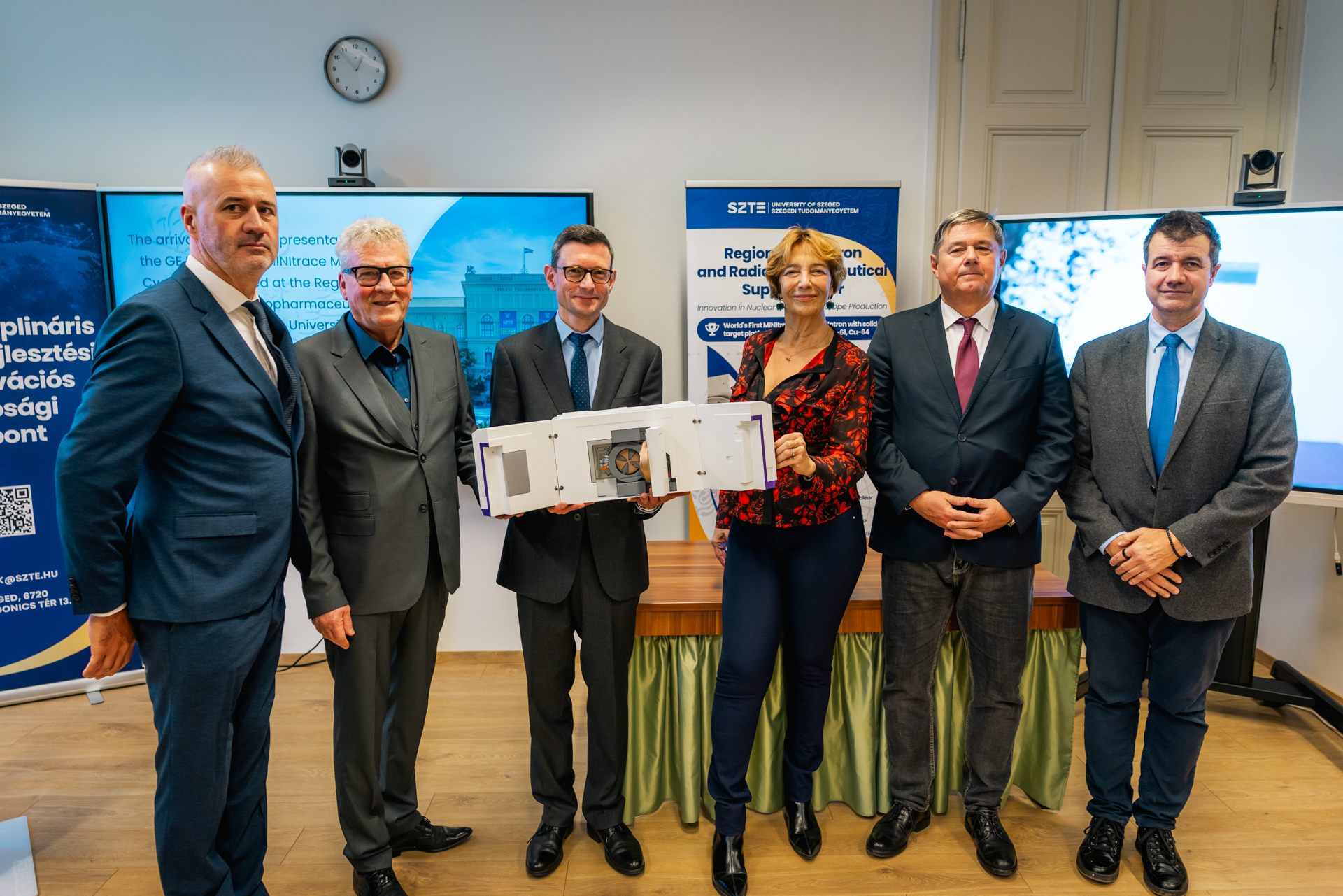
Following a cornerstone-laying ceremony for SZTE’S Regional Cyclotron and Radiopharmaceutical Supply Center in April, another major milestone has been reached in one of the University of Szeged’s flagship strategic investments. On December 9, GE HealthCare announced that – for the first time worldwide – the MINItrace Magni cyclotron will be installed at the University of Szeged, marking a major advance for nuclear medicine and theranostic treatment in Hungary. At a special event held at the University’s main building, the significance and future impact of the pioneering device were outlined by Prof. Dr. László Rovó, Rector of the University of Szeged; Dr. Judit Fendler, Chancellor; Prof. Dr. László Pávics, Professor at the Institute of Nuclear Medicine and project leader; Dr. György Erőss, Regional Customer Relations Manager for Central and Eastern Europe at GE HealthCare Hungary Kft.; and Jan Wolber, Global Product Leader for GE HealthCare Digital.
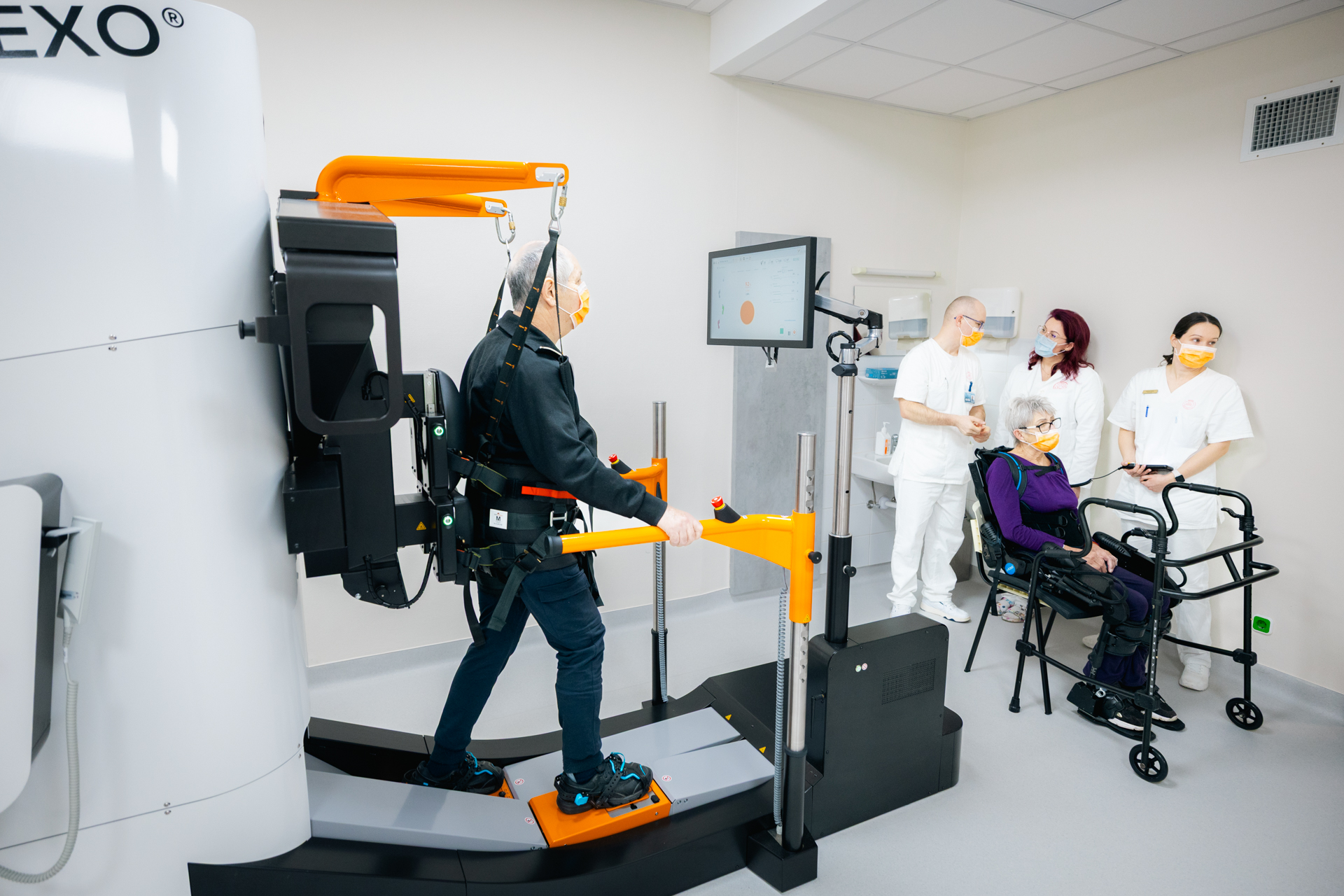
The University of Szeged has inaugurated its Human Kinesiology Laboratory, where cutting-edge robotic technologies are being deployed to enhance the effectiveness of rehabilitation therapies and actively support patients throughout their recovery process.
Useful links
Faculty of MedicineFaculty of Dentistry
Faculty of Pharmacy
Faculty of Health Sciences and Social Studies
International Student Union of Szeged
SUMAA
University Library
Ministry of Foreign Affairs
Office of Immigration and Nationality
College International
International Mobility Centre (ERASMUS)


