
University of Szeged
Albert Szent-Györgyi Medical School
Foreign Students' Secretariat
Your Education. Our Mission.


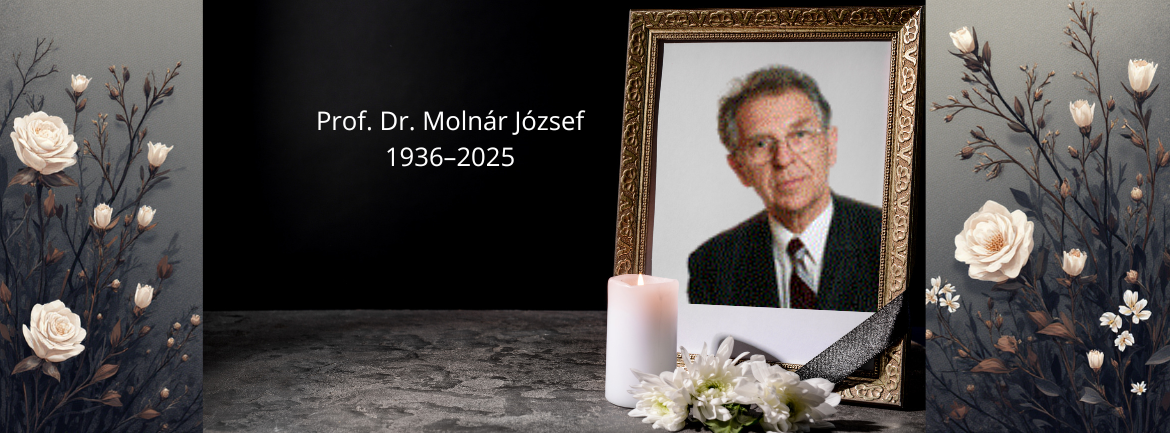
In memoriam Prof. Dr. József Molnár (1936–2025)
It is with shock and sincere sorrow that we bid farewell to Professor Emeritus József Molnár, who passed away quietly at the age of 89.
We are saying goodbye to an exceptional scientist, a dedicated teacher and an extraordinary person, whose intellectual legacy will remain with us for a long time to come.
Professor József Molnár completed his university studies at the Medical University of Szeged, where he received his medical degree in 1961. From that year until the end of his life, he remained loyal to the University of Szeged and the Department of Medical Microbiology, a community he not only served but also shaped, where he also worked as Vice dean of the Faculty of Medicine from 1985 to 1991. In 1985, together with Professor Gyula Telegdy and Professor László Kovács he actively contributed to launching the English language medical training in Szeged.
His scientific career was outstanding. As a doctor of the Hungarian Academy of Sciences, he achieved internationally recognized results in research on microbiology, bacterial genetics, virulence, combined chemotherapy and tumor cell resistance. His scientific career is marked by more than 450 scientific publications, two patents and countless international collaborations. His research activity was always guided by a sense of responsibility towards patients and a desire to alleviate human suffering. In addition to his research activity, he had a significant impact as a teacher and mentor, teaching medical microbiology to generations of medical, dental and pharmacy students since 1965. His lectures not only imparted knowledge, but also encouraged students to think, ask questions and take responsibility.
Professor József Molnár was first and foremost a human being: attentive, helpful, modest and reliable. He was a professor whose door was always open, who listened to questions and who never forgot where he came from. He continued to work actively as an emeritus professor because, for him, science and education were not work but a way of life. Now that he is gone, we are all a little poorer.
His students, colleagues and all those who knew him know that what he provided us with will never be forgotten. On behalf of the staff of the Department of Medical Microbiology, I bid farewell with the words of Khalil Gibran: ’Life does not leave those who pass away; it only changes shape in the hearts of those who remain.’
We will cherish his memory with love and gratitude.
Prof. Dr. Katalin Burián
Head of the Department of Medical Microbiology
Albert Szent-Györgyi Medical School
Latest news
It is with shock and sincere sorrow that we bid farewell to Professor Emeritus József Molnár, who passed away quietly at the age of 89.
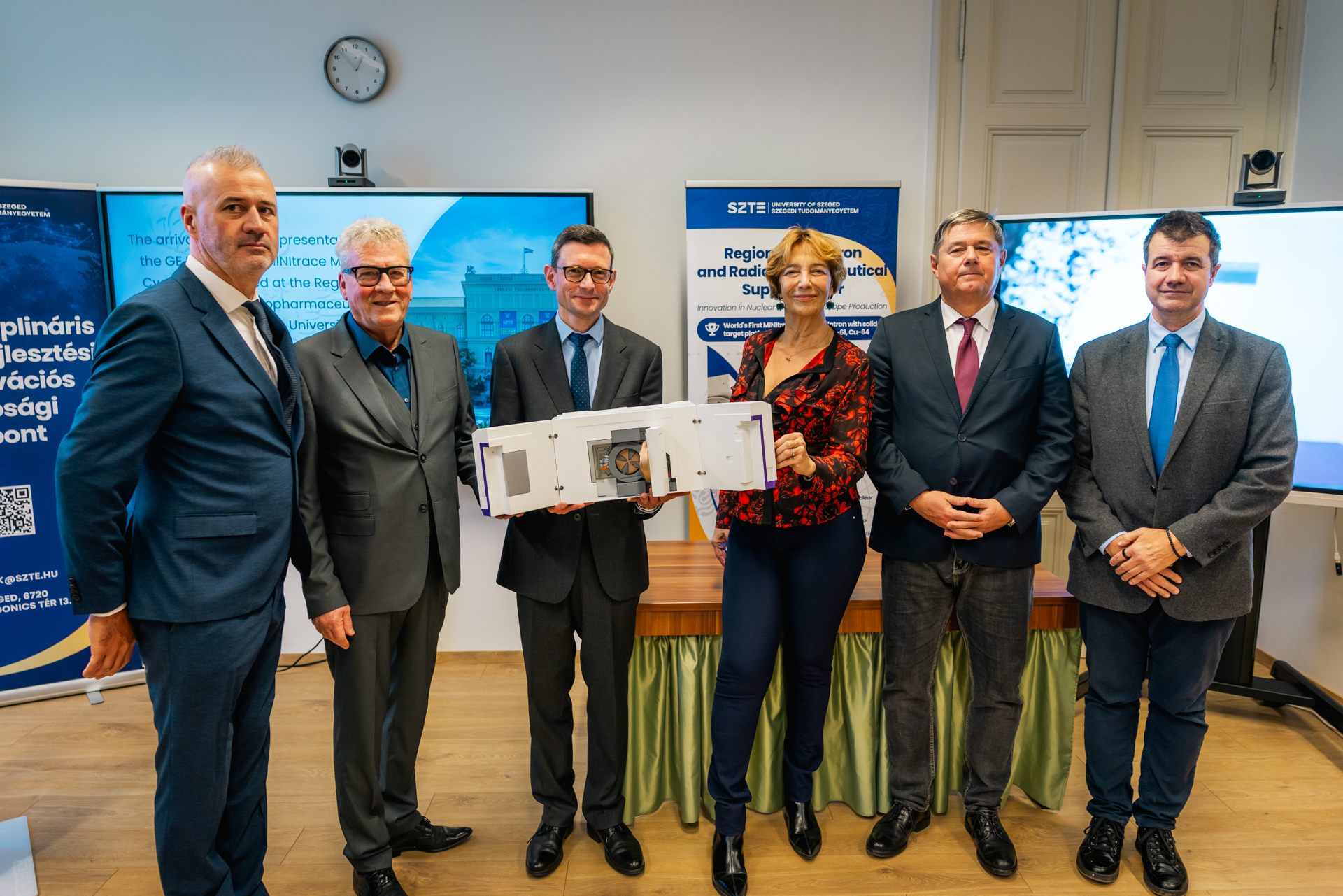
Following a cornerstone-laying ceremony for SZTE’S Regional Cyclotron and Radiopharmaceutical Supply Center in April, another major milestone has been reached in one of the University of Szeged’s flagship strategic investments. On December 9, GE HealthCare announced that – for the first time worldwide – the MINItrace Magni cyclotron will be installed at the University of Szeged, marking a major advance for nuclear medicine and theranostic treatment in Hungary. At a special event held at the University’s main building, the significance and future impact of the pioneering device were outlined by Prof. Dr. László Rovó, Rector of the University of Szeged; Dr. Judit Fendler, Chancellor; Prof. Dr. László Pávics, Professor at the Institute of Nuclear Medicine and project leader; Dr. György Erőss, Regional Customer Relations Manager for Central and Eastern Europe at GE HealthCare Hungary Kft.; and Jan Wolber, Global Product Leader for GE HealthCare Digital.
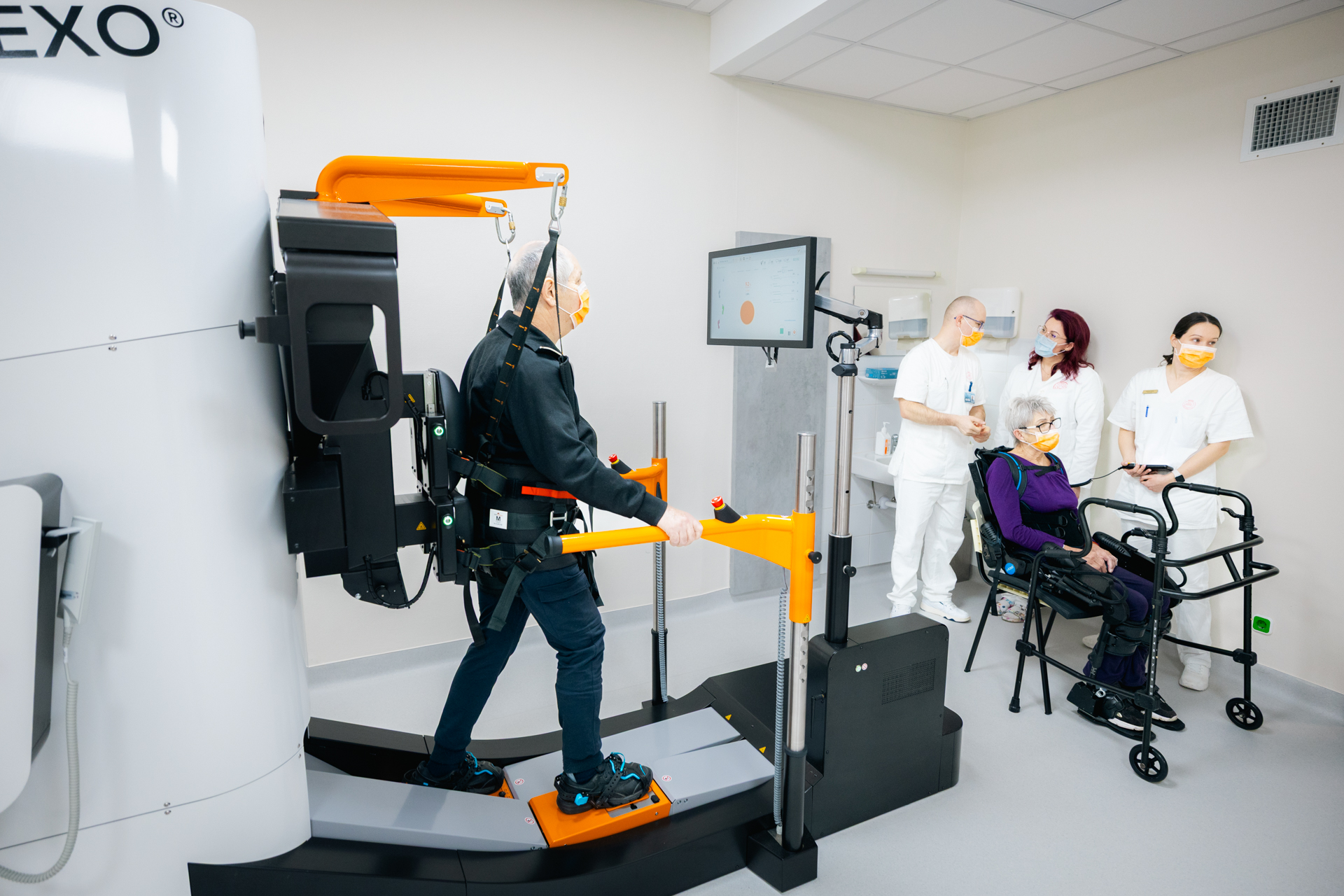
The University of Szeged has inaugurated its Human Kinesiology Laboratory, where cutting-edge robotic technologies are being deployed to enhance the effectiveness of rehabilitation therapies and actively support patients throughout their recovery process.
Useful links
Faculty of MedicineFaculty of Dentistry
Faculty of Pharmacy
Faculty of Health Sciences and Social Studies
International Student Union of Szeged
SUMAA
University Library
Ministry of Foreign Affairs
Office of Immigration and Nationality
College International
International Mobility Centre (ERASMUS)


