
University of Szeged
Albert Szent-Györgyi Medical School
Foreign Students' Secretariat
Your Education. Our Mission.


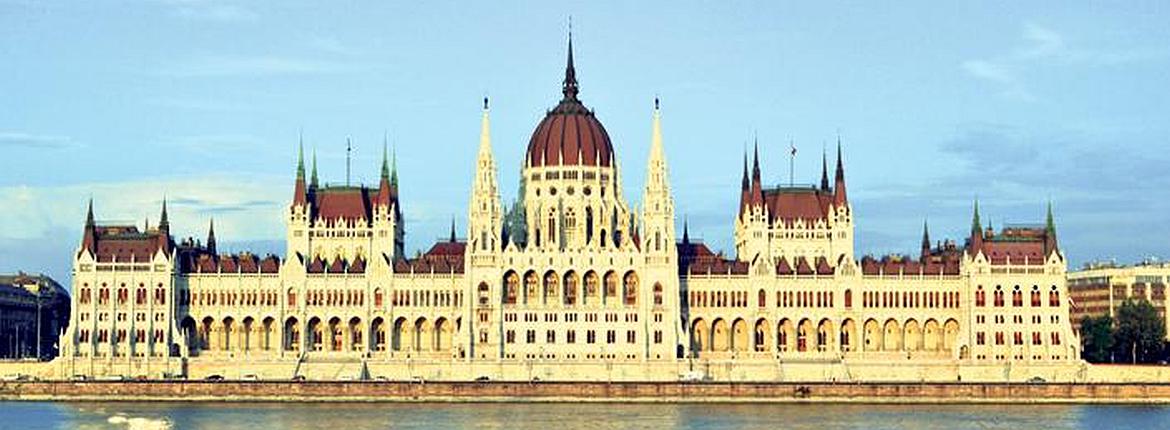
Brief History of Hungary
Hungary began as a separate state with the arrival of the Hungarians under the leadership Árpád in the 9th century. Stephen I. was the first king of Hungary who introduced Christianity and created a constitutional kingdom of the tribal state.
In 1241 Hungary was invaded by the Tartars then two centuries later the country faced the Turkish threat. In 1458 Matthias Hunyadi was elected the king of Hungary and his name has become a legend in Hungary because he was popular for his sense of social justice and was a great patron of Renaissance art and literature. Turkish army defeated the Hungarians at Mohács in 1526, and a 150-year period of Turkish rule began this is why 2000-year-old Roman remains and 400-year old Turkish monuments stand side by side.
After the Turks were driven away with the help of the Austrians Hungary was dominated by the Hapsburgs. When the Paris revolution of 1848 broke out period of fighting against the Hapsburg began for independence. The revolution was crushed in 1849 and Hungary was continued to be oppressed. Though in 1867 Austria granted some concessions to Hungary, the First World War found the two countries in a common Monarchy. The end of the war brought another revolution and Hungary became independent from Austria.
Hungary fared no better during the Second World War and after the end of the war the period of reconstruction and the build of a new society began.
Finally in 1989 Hungary got rid of the Soviet troops stayed in the country after the end of the war and society had the chance to be active participant of the first free election.
In 2004 Hungary became a member of the European Union.
Latest news
It is with shock and sincere sorrow that we bid farewell to Professor Emeritus József Molnár, who passed away quietly at the age of 89.

Following a cornerstone-laying ceremony for SZTE’S Regional Cyclotron and Radiopharmaceutical Supply Center in April, another major milestone has been reached in one of the University of Szeged’s flagship strategic investments. On December 9, GE HealthCare announced that – for the first time worldwide – the MINItrace Magni cyclotron will be installed at the University of Szeged, marking a major advance for nuclear medicine and theranostic treatment in Hungary. At a special event held at the University’s main building, the significance and future impact of the pioneering device were outlined by Prof. Dr. László Rovó, Rector of the University of Szeged; Dr. Judit Fendler, Chancellor; Prof. Dr. László Pávics, Professor at the Institute of Nuclear Medicine and project leader; Dr. György Erőss, Regional Customer Relations Manager for Central and Eastern Europe at GE HealthCare Hungary Kft.; and Jan Wolber, Global Product Leader for GE HealthCare Digital.
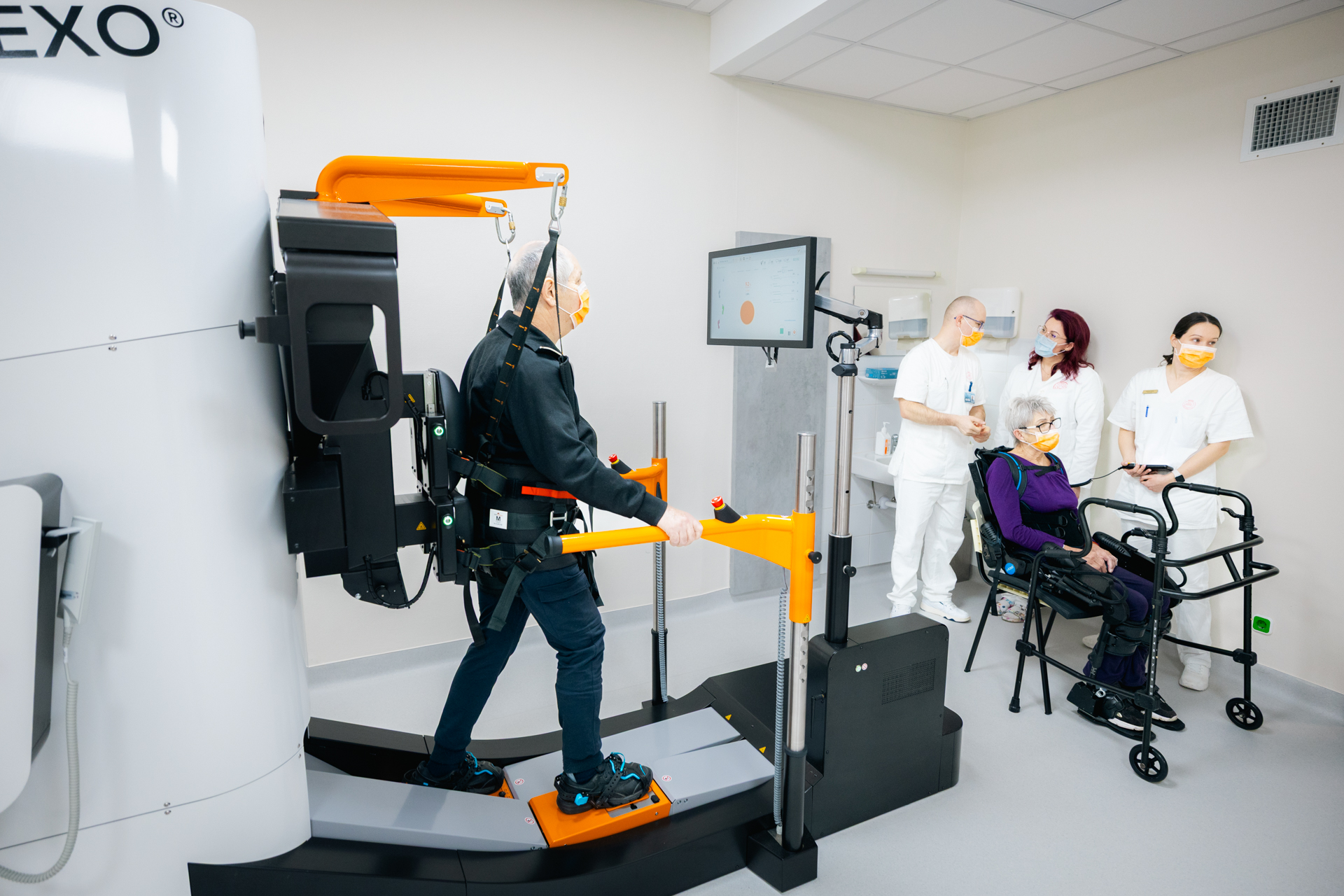
The University of Szeged has inaugurated its Human Kinesiology Laboratory, where cutting-edge robotic technologies are being deployed to enhance the effectiveness of rehabilitation therapies and actively support patients throughout their recovery process.
Useful links
Faculty of MedicineFaculty of Dentistry
Faculty of Pharmacy
Faculty of Health Sciences and Social Studies
International Student Union of Szeged
SUMAA
University Library
Ministry of Foreign Affairs
Office of Immigration and Nationality
College International
International Mobility Centre (ERASMUS)


