
University of Szeged
Albert Szent-Györgyi Medical School
Foreign Students' Secretariat
Your Education. Our Mission.


Structure of Studies
At the University of Szeged, teaching is performed under credit system in modules.
Students have to fulfill all the requirements of a certain module in order to enter the next one. This means that a given number of credits have to be acquired in different types of courses each module:
Compulsory Courses,
Compulsory Elective Courses,
Elective Courses and
Criteria Subjects
Students are provided a detailed suggested study plan at the time of registration.
List of courses are also avilable in the "Admission and Academic Bulletin" (from page 34):
https://www.med.u-szeged.hu/fs/admission-and-academic/admission-and-academic
Types of Evaluation
Term Mark (gyakorlati jegy) -- continuous testing of practical knowledge, 5 grade system
Evaluation (beszámoló) -- evaluation of the subject matter of one semester in 5 grade system
Examination (kollokvium) -- evaluation of the subject matter of one semester in 5 grade system
Comprehensive Exam (szigorlat) -- evaluation of the subject of one, two or more semesters in 5 grade system
Preliminary Exam (elővizsga) -- evaluation of the subject matter of one semester in 5-grade system
Grading System
Five-grade system
5 Excellent (jeles)
4 Good (jó)
3 Accepted (közepes)
2 Passed (elégséges)
1 Failed (elégtelen)
Academic Calendar
Degree Programs:
Fall Semester: beginning of September through end of January
Spring Semester: beginning of February through beginning of July
Foundation Year:
Fall Semester: beginning of September through end of December
Spring Semester: beginning of January through end of April
Latest news
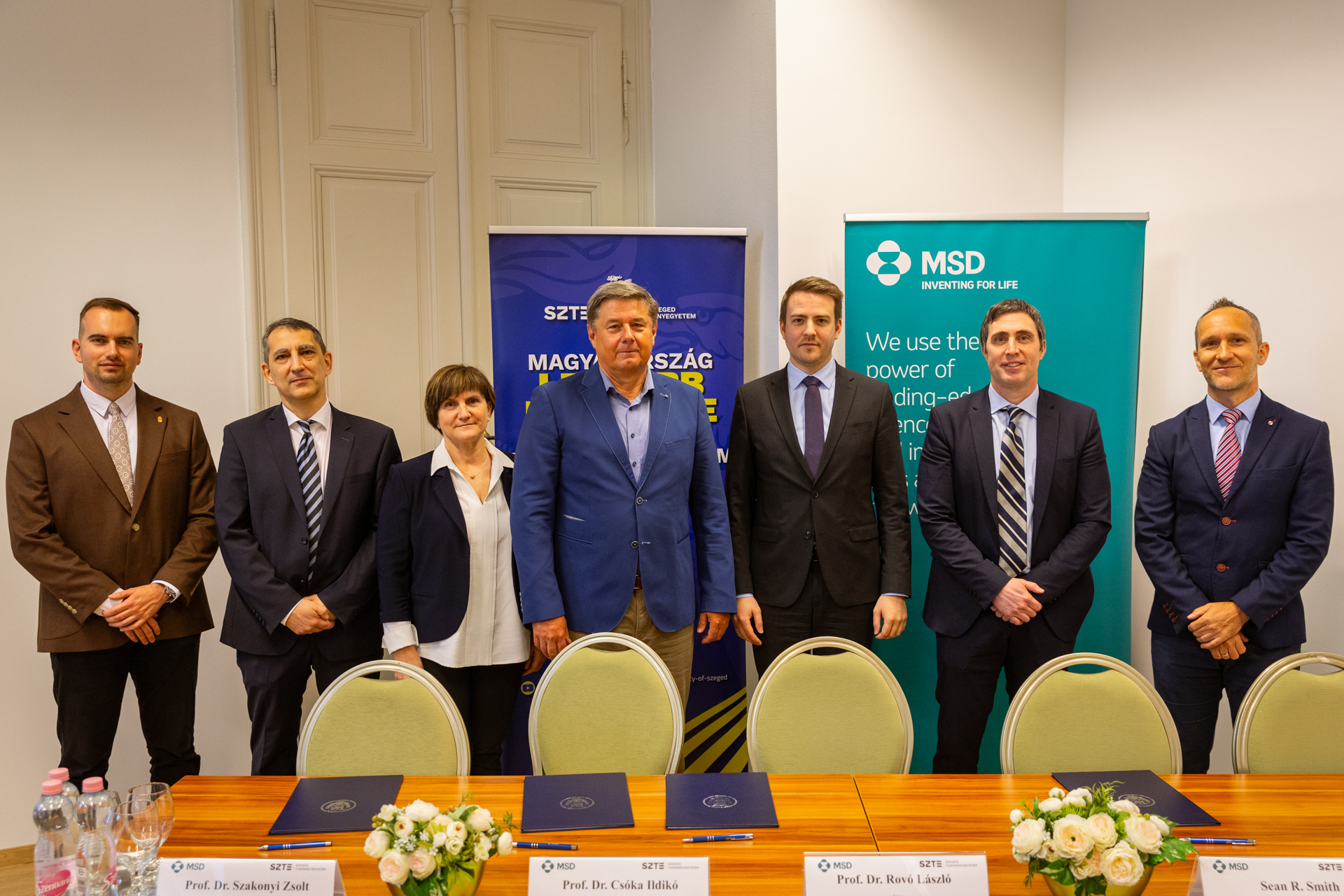
The University of Szeged and MSD have established a joint Pharmaceutical Industry Partnership Department, marking a new chapter in their collaboration. This initiative builds on a long-standing partnership – further strengthened in 2023 through clinical trial cooperation – and seeks to foster innovation in research, education, and pharmaceutical development. The agreement was officially signed in Szeged by Prof. Dr. László Rovó, Rector of the University of Szeged; Prof. Dr. Ildikó Csóka, Director-General for Strategic Planning; Prof. Dr. Zsolt Szakonyi, Dean of the Faculty of Pharmacy; Sean R. Smith, Managing Director of MSD Pharma Hungary Kft.; and Dr. Szabolcs Barótfi, Director of Clinical Research at MSD Hungary.
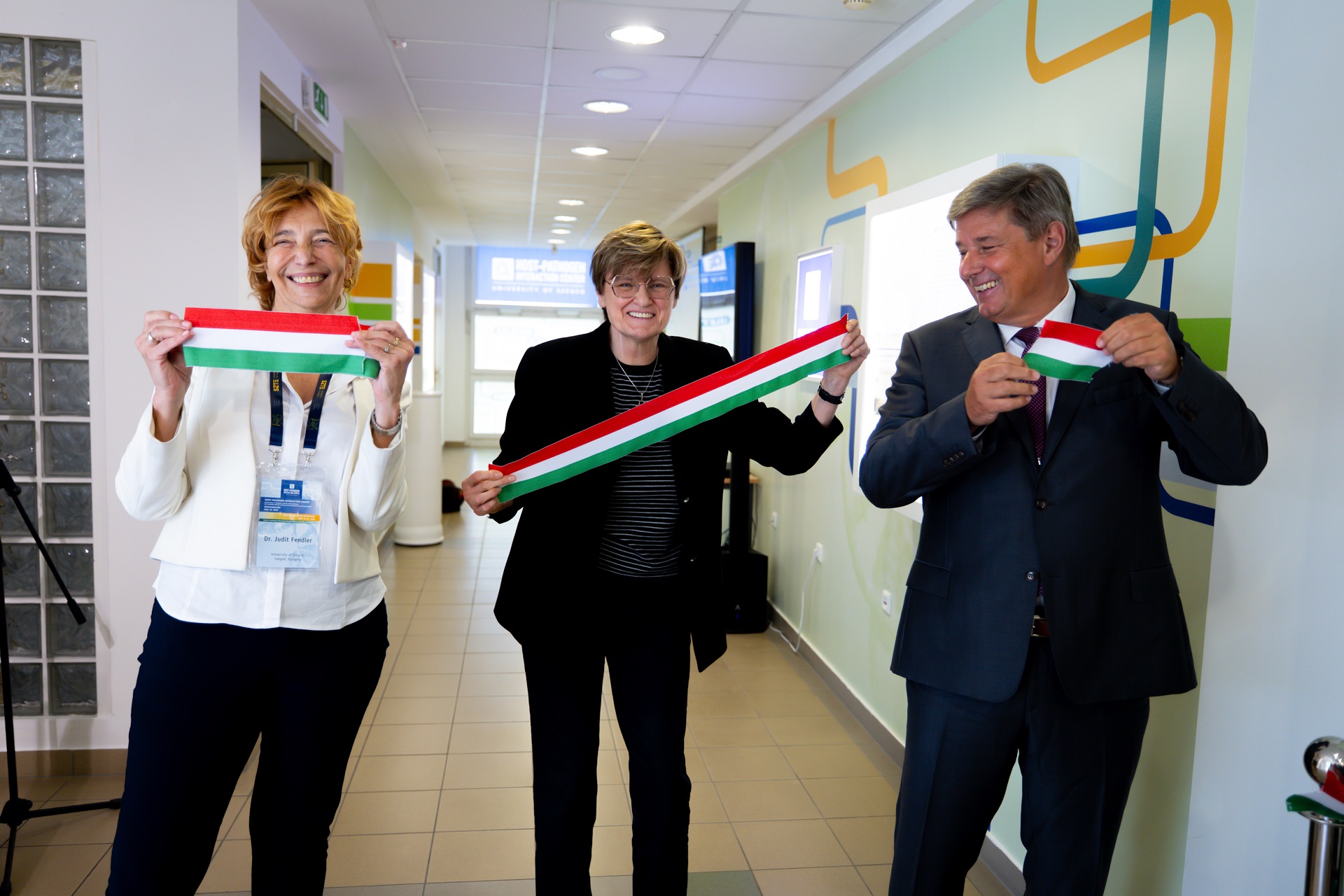
On May 12, the University of Szeged held an official ceremony to inaugurate its new research unit: the Host–Pathogen Interaction Center. Located within the Institute of Biology, the Center features Hungary’s only in vivo experimental station of its kind, alongside five newly renovated laboratories. This state-of-the-art facility is designed to support the development of antimicrobial therapies, with a particular focus on antifungal treatments – addressing a pressing yet often overlooked public health concern. The project was made possible through both professional and financial support from Katalin Karikó, an SZTE alumna and recipient of the 2023 Nobel Prize in Physiology or Medicine.
Useful links
Faculty of MedicineFaculty of Dentistry
Faculty of Pharmacy
Faculty of Health Sciences and Social Studies
International Student Union of Szeged
SUMAA
University Library
Ministry of Foreign Affairs
Office of Immigration and Nationality
College International
International Mobility Centre (ERASMUS)


