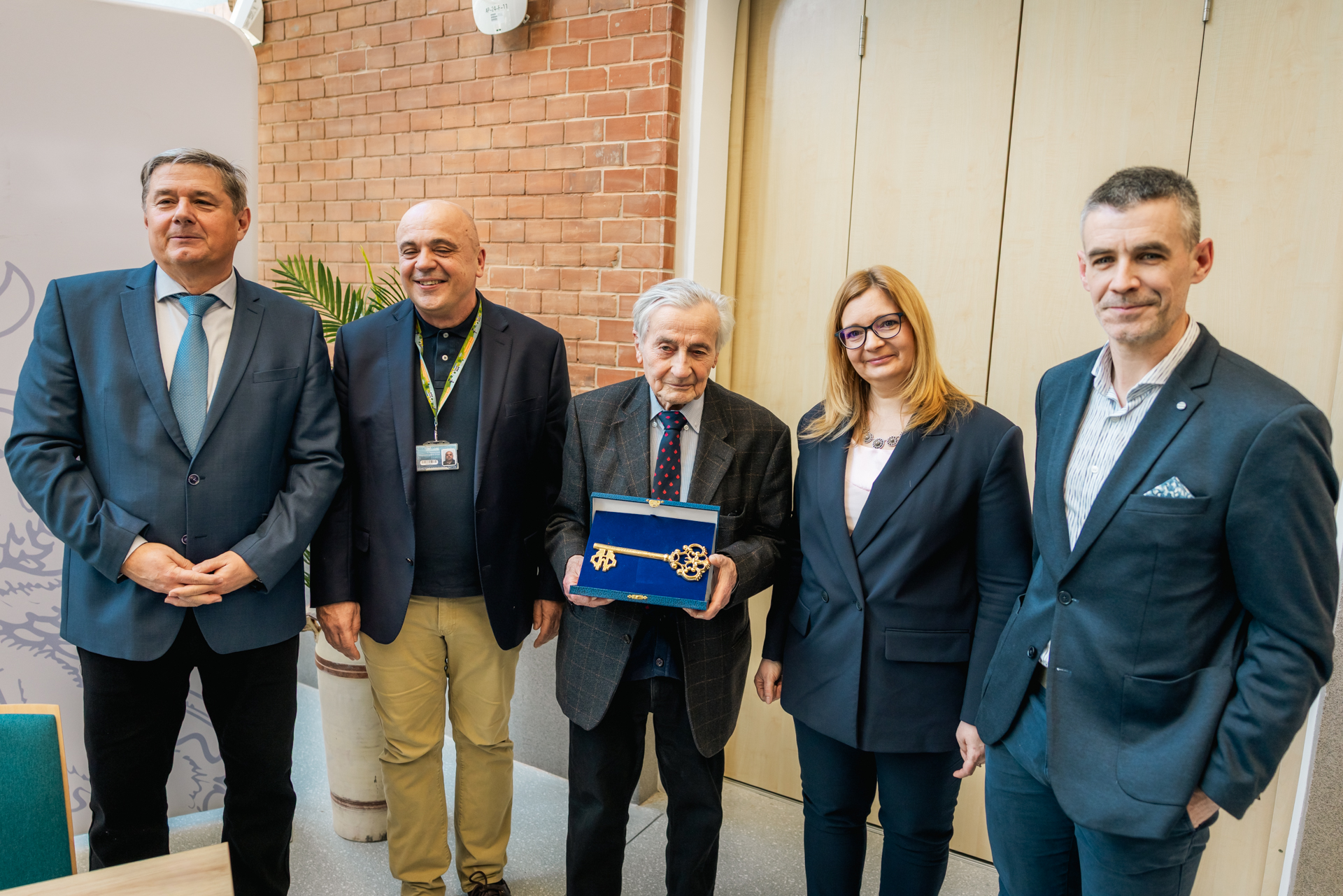
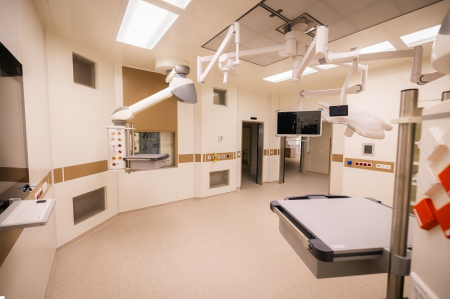
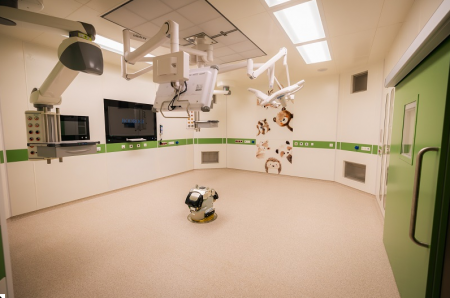
’I am delighted that the operating suite at the Department of Pediatrics has finally been renovated. There are outstanding specialists working in pediatric surgery in Szeged. Although they have had a hard time in recent years, they still carried out their work with exceptional dedication and perseverance,’ said Prof. Dr. Kristóf Füzesi, a defining figure in the history of pediatric surgical care in Szeged. In February 2026, the professor emeritus himself attended the ceremonial inauguration of the renovated operating suite and the brand new pediatric emergency care unit at the Department of Pediatrics of the Albert Szent-Györgyi Medical School in Szeged. Apropos of the event, we recalled in an interview how the department had evolved into its current state-of-the-art form over the past six decades.
Sixty years ago, on September 1, 1966, a self-contained pediatric surgery department started to operate in Szeged. This was a huge step, as pediatric surgery had not existed as an independent specialty in Hungary until then. Globally, it was also beginning to take shape at that time, and in Hungary—like in other Eastern European countries—only later did it become an independent specialty. ’As a newly certified adult surgeon, I had no background in pediatric surgery at the time. Our resources were very limited back then. We didn’t yet have access to English-language literature. I learned from a German-language book, for example, and I even sat for my board exam based on that knowledge. First in adult surgery, and then the pediatric surgery board exam built upon that. Pediatric surgery only became available as a standalone board exam later on,’ the professor recalled.
He explained that the pediatric surgery department initially drew heavily on his experience gained from study trips abroad: he had the opportunity to expand his knowledge in Halle, as well as in Zurich and Glasgow. As a result of his study trips to the United Kingdom, he introduced modern approaches to neonatal surgery, as well as pediatric urological and cleft palate surgery procedures in Szeged. He was the first in Hungary to perform endoscopic sclerotherapy for esophageal varices—a procedure in which abnormally dilated veins are closed off by injecting a special substance. He was a pioneer in endoscopic examination of the airways and in the bronchoscopic removal of foreign bodies from the respiratory tract.
It also occurred during this period that the pediatric surgery departments in Szeged, Budapest, and Pécs jointly received European accreditation. This means that the specialist certification earned here is recognized throughout Europe. ’As pediatric surgeons, we encountered an extremely wide variety of professionally exciting cases, ranging from hydrocephalus to clubfoot, through chest and abdominal surgeries, all the way to urological procedures. It is these challenges that make our profession so rewarding,’ Prof. Füzesi said. He explained that several conditions with a nearly 100 percent mortality rate in the late 1960s, now have safe and reliable treatment methods. Examples include esophageal atresia, a developmental abnormality of the esophagus, as well as certain tumors such as Wilms’ tumor, a malignant kidney tumor that primarily affects young children and is now considered a curable disease. ’Today, the mortality rate of these diseases is very low. Based on my own experience, I can say that there has been tremendous progress in Hungary over the past decades,’ he said.
The modernization of pediatric surgery also enabled the separation surgery on conjoined twins Melinda and Izabella from Kispereg (Peregu Mic, Romania) in Szeged in 1998. The operation, which earned nationwide attention, was not only a milestone in the work of Professor Füzesi and his team but also set an important benchmark in the history of Hungarian pediatric surgery.
As the Professor put it, a surgeon is essentially an internist who can also perform surgeries. ’I have never considered my profession as one with merely an executive role. I enjoyed diagnostics just as much as the surgeries themselves. Pediatric surgery is a truly rewarding field. Nature does its part as well: it often helps, since children heal much faster and are much more resilient than adults. They usually recover if we don’t mess it up,’ the professor remarked.
The introduction of the latest, state-of-the-art techniques—minimally invasive surgical procedures and robotic surgery—has greatly contributed to the recovery of young patients. However, with their emergence, Prof. Füzesi felt that, due to his age, he could no longer keep pace with the rapid advancements in medicine. ’I have a very long career behind me. I’ve experienced such significant changes that I often say my career spanned from slateboards to laptops: I started learning to write on a slateboard and finished conducting exams on laptops,’ he said.
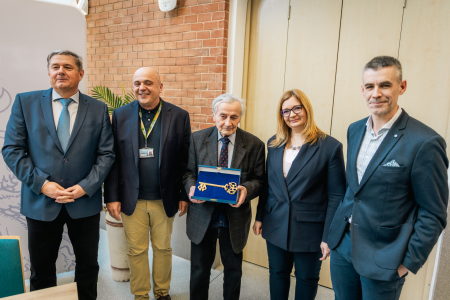
For him, surgery has been a true passion and a lifelong vocation. He explained that whenever he went on vacation, no matter where he spent his time, by the end he was always eager to return to the clinic and operate again. ’I thoroughly enjoyed every minute of medicine, and for forty-five years I always looked forward to going to work. I’m lucky, because my profession and my hobby have always been very much the same,’ the professor said. Dr. Kristóf Füzesi continued to perform surgeries until he was seventy, and for years afterward, until he was seventy-five, he continued to participate in the training of medical students and residents.
University of Szeged
University of Debrecen
Semmelweis University Budapest
University of Pécs