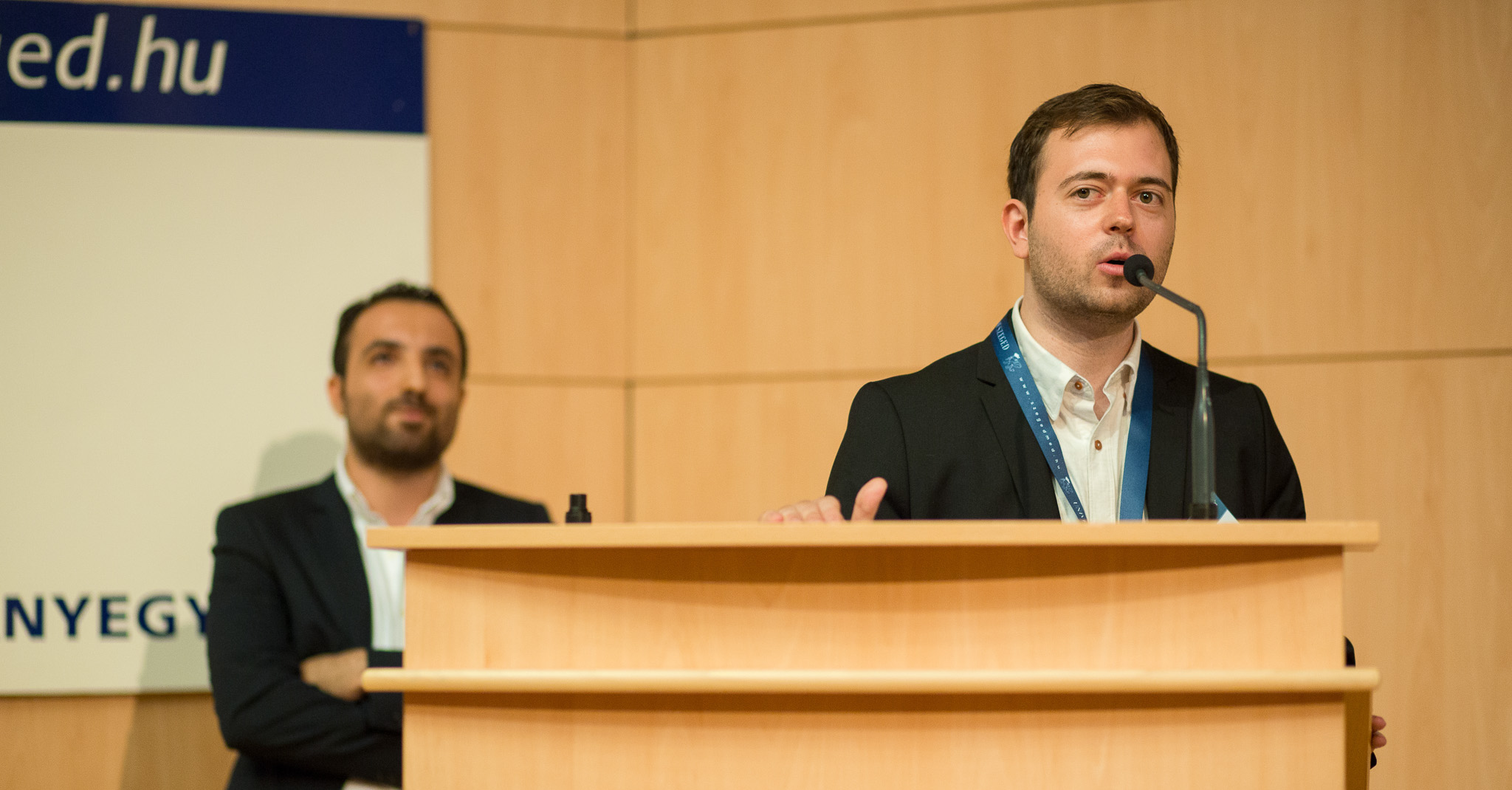
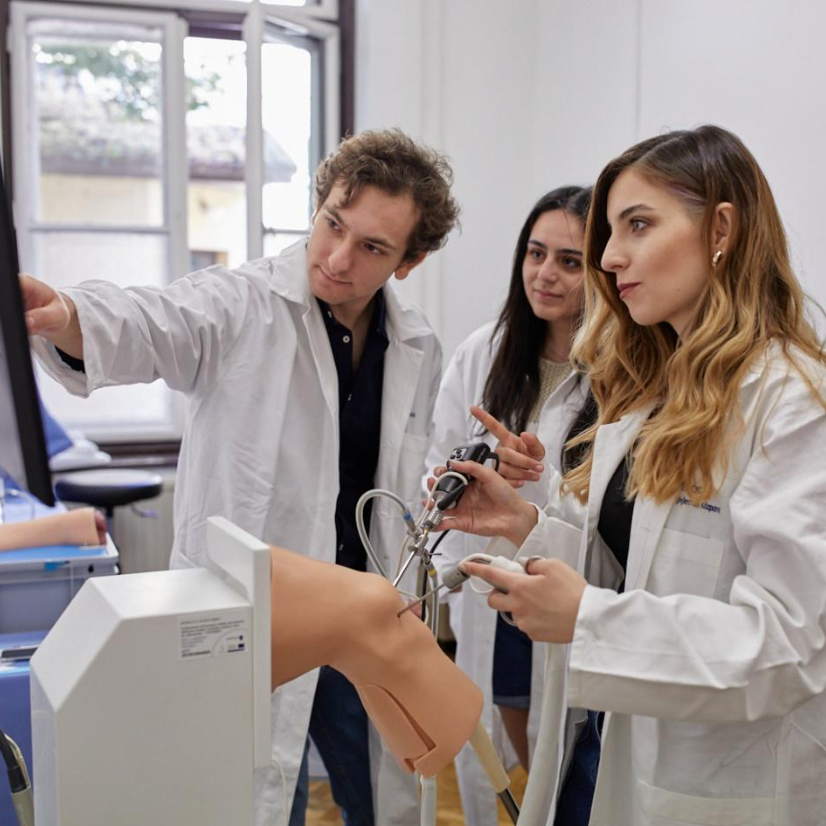
Benedek Bozóky, alumnus of the Medical School from the Class of 2015, represents the kind of versatility that defines modern academic medicine. A clinical oncologist and consultant, he is also a researcher in tumor biology as well as Artificial Intelligence (AI) at the Karolinska Institutet (Sweden), where he teaches courses for medical students and residents. Beyond his work in medicine and science, he also contributes to academic leadership as a member of the Board of Karolinska and remains deeply connected to his roots in Szeged. As one of the co-founders of the Szeged University Medical Alumni Association (SUMAA), he still actively contributes to the work of the Medical School’s Alumni Board. In recognition of his longstanding dedication to the community, he received the Distinguished Alumnus Award at the school’s 40-year reunion.
Interview with Benedek Bozóky M.D., Co-Founder of SUMAA
As one of the co-founders of the Szeged University Medical Alumni Association (SUMAA), could you reflect on its origins? What inspired the idea, and how did you manage to launch it alongside the demands of your medical studies?
The spark for SUMAA came from my close friend and fellow graduate, Aydin Tajeri. During our time in medical school, we led the International Student Union of Szeged (ISUS)—Aydin as Chair and myself as Vice-Chair. Together with a dedicated team of students, we worked to revitalize student representation through increasing engagement and building a robust framework for the international community.
As graduation approached, we weren't ready to let that momentum fade. We realized there was a missing link: a way to support graduates once they have left the university halls. We wanted to create a platform that would continue to improve the university and provide a 1soft landing’ for new doctors. Balancing this with our final years of medical school was certainly a challenge, but our shared vision and the collaborative spirit we developed at ISUS made it possible.
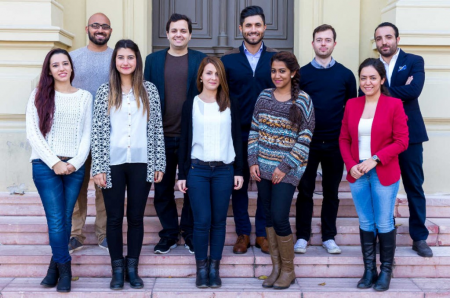 |
| SUMAA Board in 2015 |
Looking back at those early days, what were the main objectives of the Association? How do you feel about the way it—and the university’s international culture—has evolved since you graduated?
Szeged is in a unique position because its graduates are truly global. Our objective was clear: to reap the benefits of this worldwide network. We wanted to connect alumni to help current students navigate the transition from graduation to the workforce—assisting them in choosing a medical specialty and finding work opportunities in different countries.
Returning to Szeged for the recent alumni events has been a revelation. I am deeply impressed by the continued development of the facilities and the education. Seeing the student union still thriving and actively shaping the student experience is wonderful. I’m also thrilled to see the progress in integrating international students into Szeged’s prestigious scientific community. While I was among the first international students to participate in TDK research, it is now heartening to hear that this has become a standard path for many in the English-language program.
 |
| Aydin Tajeri M.D. and Benedek Bozóky M.D. |
Your professional journey has been remarkable. Could you walk us through your career path from graduation to the Karolinska Institutet? What led you to specialize in oncology?
My path was profoundly shaped by the late Professor George Klein, a Hungarian-born scientist who moved to Sweden and laid the foundation for tumor biology research at the Karolinska Institutet (KI). I began working in his research group during my third year of medical school, spending summers in his laboratory in Stockholm. It was an incredibly supportive and exciting environment; even as a medical student, I was fortunate enough to publish two first-author papers in international journals under his mentorship and participate in several TDK conferences.
After graduating from Szeged with the Discipli pro Universitate distinction—and having been honored as a Junior Templeton Fellow, the Sófi Scholarship, and SZTE Talent — applying for a PhD in Prof. Klein’s group was a natural next step. Since Professor Klein led the Nobel Committee for Physiology or Medicine for decades, his lab was a crossroads for the world’s most elite researchers. It was an incredible privilege to interact with scientific giants on a weekly basis. This immersion in tumor biology research, combined with the excellent clinical oncology elective I attended back in Szeged, made my decision to specialize in Clinical Oncology a very clear one.
You also took on significant leadership roles at Karolinska. How did those experiences shape your perspective on medicine and academia?
Building on the foundation I got in Szeged during my work in student representation, I was elected Chair of the Doctoral Students' Association at Karolinska, representing over 2,200 PhD candidates. This led to a seat on the Board of Karolinska (Konsistorium), which at the time oversaw a university ranked as the 14th best in the world.
Serving on the Board of Research, the Board of Doctoral Education, and the Innovation Council provided me with an inside look at the complexities of leading a world-class institution. I learned that university governance is just as critical as the science itself. In recognition of this service, I was honored to receive the Parva Scintilla Medicorum award for my work. These roles taught me that medicine is not just about the patient in front of you, but also about the systems and educational frameworks that empower future generations of doctors.
Tell us about your current work. What does a ’typical’ day look like for you, and why did you choose this specific field?
I currently work as a Clinical Oncologist in the Lung Oncology Center at Karolinska University Hospital—recently ranked as the top hospital in Europe and fourth worldwide. It is a privilege to work alongside such brilliant colleagues in such a well-functioning and supportive environment.
One of the most rewarding aspects of my current clinical work is my involvement with Cancers of Unknown Primary (CUP). This allows for a unique family collaboration: I frequently participate in multidisciplinary meetings where the lead pathologist is my father, Bela Bozoky, who is also a Szeged graduate.
Beyond the clinic, I remain deeply involved in research and education. In my research, I am exploring the use of Large Language Models (LLMs) on electronic health records, a frontier I believe will revolutionize medicine. My teaching portfolio is also quite diverse; I lead the oncology course for medical students, a precision medicine course for exchange students from the United States, and a specialized course for residents on ’AI for Clinicians.’
My schedule is a mix of clinical days—where I work as a consultant, see patients in the outpatient clinic, or attend tumor boards—and days dedicated to teaching and research. While there is no such thing as a ’typical’ day, I truly enjoy the variety within these three pillars of my professional life.
What keeps you motivated to stay connected with the Szeged Medical School and its Alumni community?
I have deep roots in Hungary. Although I grew up in Stockholm, I was born in Szeged to Hungarian parents, and Hungarian is my mother tongue. Returning to the city feels like coming home. The international environment at SZTE gave me lifelong friends, which was beautifully reaffirmed during our recent alumni reunion.
The university is also a family legacy for me. My father and uncle are graduates, my sister Felicia is an alumna, and my two younger brothers, Alfréd and Loránd, are currently in their third and fourth years of the English program. My years in Szeged were tough, but they were full of life—from the ISUS and Erasmus exchanges in France to the university floorball and football teams. Those defining years created a bond that I will always cherish.
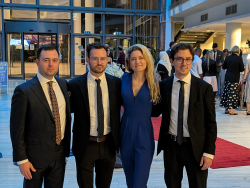 |
| The Bozóky siblings at the 40-year reunion |
Finally, what are your thoughts on the current Alumni Committee and its activities?
They are doing an incredibly professional job. It is gratifying to see the current Committee take the early foundations of SUMAA and elevate them to such a high standard. The success of the recent Alumni Reunion—its organization and its atmosphere—was a testament to their hard work. I am pleased that the Faculty recognizes the value of this organization and continues to offer its full support. I look forward to continuing the work as part of this excellent team and reaching the goals we set out to achieve at the very beginning.