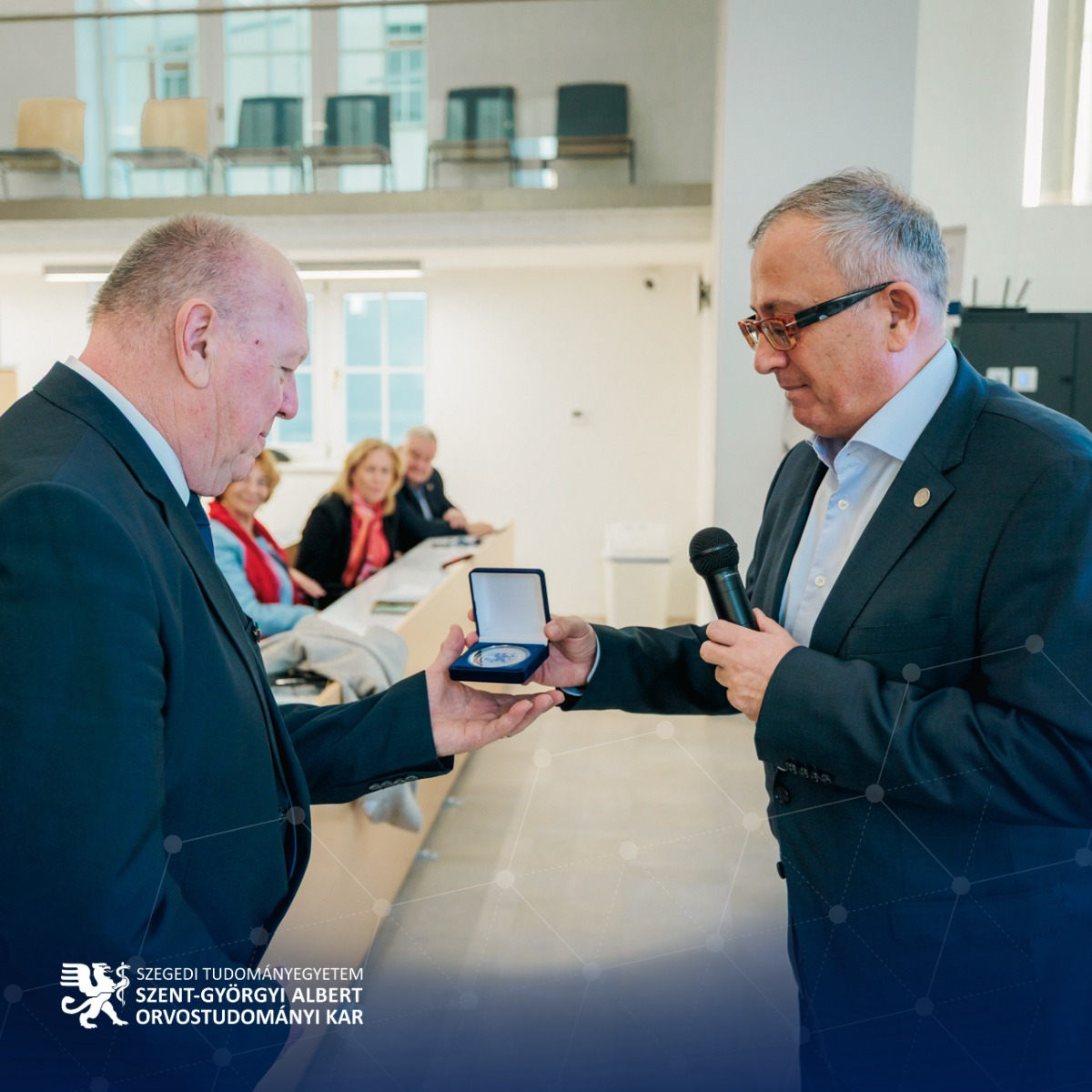
The Department of Pathology at the Albert Szent-Györgyi Medical School held a laudation event on February 27, 2026, on the occasion of Prof. Dr. László Tiszlavicz's 70th birthday. At the ceremony, the heads of the Medical School, as well as former and current colleagues and students, commemorated the professor's outstanding work.
Prof. Dr. László Tiszlavicz has been working at the Department of Pathology in Szeged since 1983 and has gained outstanding experience in the diagnosis of diseases of the alimentary tract, rectum, central nervous system, and hematopoietic system during his career. He began his scientific career with the pathomorphological examination of tumors, and his habilitation work was also written in this field. In recent years, he has focused on researching the role of mitochondria.

’Mitochondria are the energy-producing units of cells, so-called power houses. Their malfunction underlies many cancers and civilizational diseases. When I caught COVID myself, out of curiosity we examined the effect of the virus on mitochondria and found that it does indeed damage them. Our research was significantly supported by the Hungarian Academy of Sciences and resulted in an internationally recognized study,’ the professor said.
One of the most outstanding results of Professor Tiszlavicz's work is the pathomorphological examination of precancerous conditions of the esophagus, which he conducted together with his former PhD student, Dr. István Németh, and which has brought him national and international recognition.
He is also credited with developing the electron microscopic diagnosis of primary ciliary dyskinesia of the airways with his research colleague Dr. Zsolt Rázga, which has become a benchmark methodology at the national level. His findings contributed not only to diagnostics but also to clinical research: he participated in numerous clinical studies on gastroenterology, which resulted in international publications.
Professor Tiszlavicz was not only a role model professionally but also in his personal life: he ran a family doctor practice in Makó for 40 years while raising four children. In addition, he performed on-call duties on a daily basis while researching, teaching, and managing the Department.
The Department of Pathology is still outstanding in gastrointestinal diagnostics, electron microscopy, breast and neurological pathology, and the diagnosis of kidney diseases. In 2025, the opening of the molecular diagnostics center turned the Szeged institute into one of the leading molecular pathology centers in Hungary—and Professor Tiszlavicz also played a significant role in this achievent.
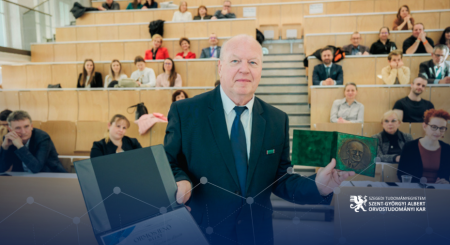
What the professor considers to be of particular importance for the future is research into mitochondria: ’If I had more time, this field could even be a contender for the Nobel Prize, but more importantly, this research will enable us to treat various diseases at a causal level,’
University of Szeged
University of Debrecen
Semmelweis University Budapest
University of Pécs